
Microgrid Pilot: Powering the Cold Chain with Innovation
How Lineage is piloting microgrids to make our network more resilient
January 28, 2026
Every day, Lineage team members around the world work together to make a better cold chain. Our Research & Development team plays a unique role in this effort. They seek out ways to improve our network and operations by piloting new technologies and designing innovative solutions.
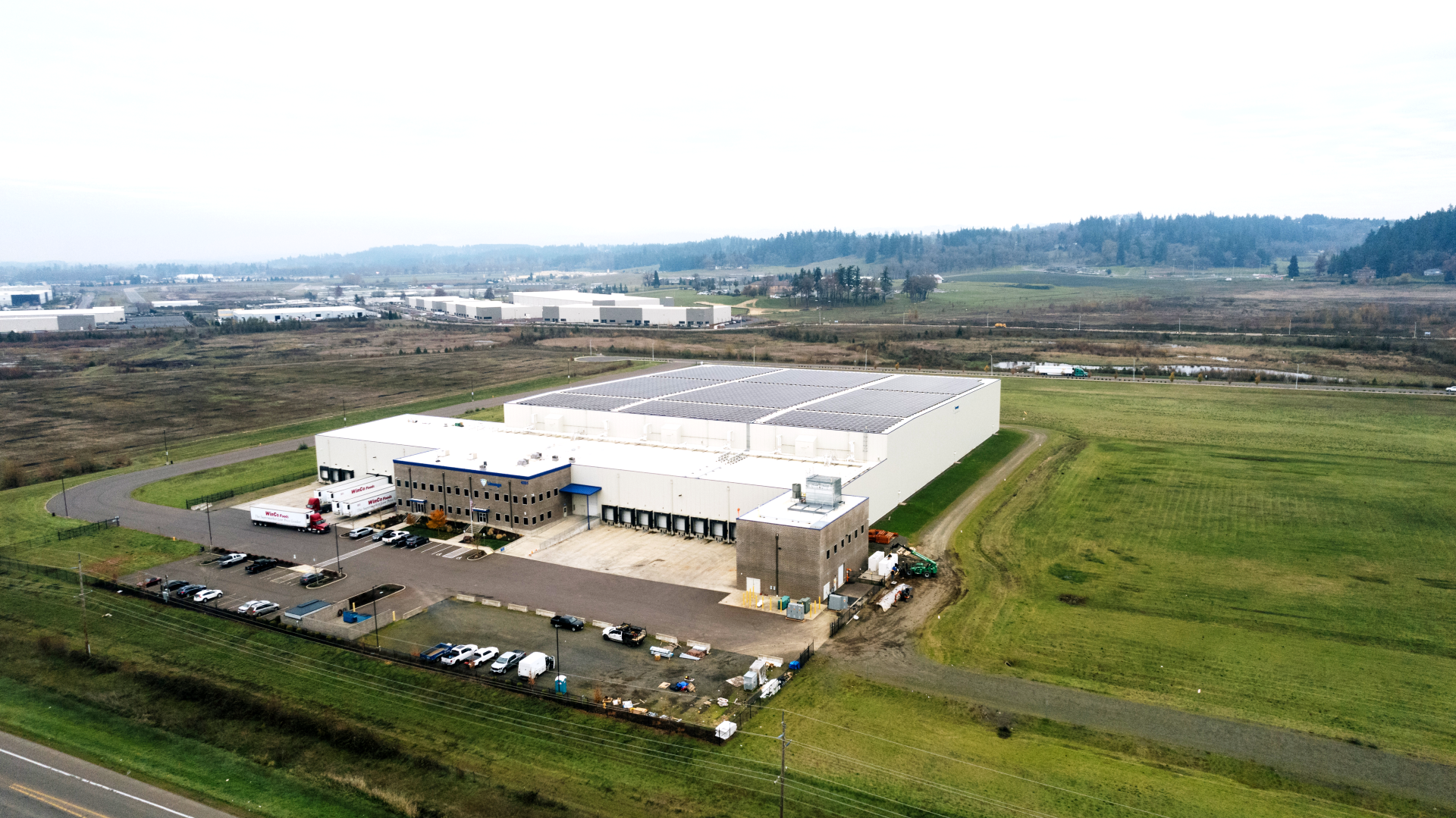
We recently shared a blog about one of their energy innovation projects – our first microgrid powering a cold storage warehouse in Salem, Oregon. This project is an outstanding example of how the cold chain can become more resilient by utilizing onsite energy-generating assets that allow us to power our operations without relying solely on the public utility grid. This ability to maintain continuity when the grid is under strain or temporarily disrupted means more peace of mind for our customers.
Simon Julien is a Lineage Data Scientist who played a large role in bringing this project to fruition. We sat down with him to learn more about microgrids, the algorithm he and others designed to control our Salem microgrid, what this project represents for Lineage and how it might help shape the future of the cold chain.
 Q: Tell us about your role at Lineage and how you became involved with the development of Lineage’s first microgrid.
Simon Julien: I work in Research & Development which is part of Lineage’s Data Science team. My role has been centered around optimizing energy profiles at Lineage facilities. Essentially, I analyze their utility bills and how they use other technologies such as solar panels or batteries to understand how their energy performance can be improved.
Microgrids leverage onsite energy assets to help meet energy consumption needs, and my work researching how to improve energy performance led to the development of a microgrid at our Salem cold storage warehouse.
Q: What problems does the microgrid aim to solve – within Lineage and for the industry?
Simon: Energy is a major cost for any industrial scale business, and Lineage is no exception. We need to cool our warehouses to keep the food we store at safe temperatures, and we do that by consuming energy.
Microgrids help us leverage onsite energy sources so we can draw less from the public utility grid. That strategy can help us control costs by avoiding using grid power during peak demand times and adds an element of resiliency to the site in the event of a temporary disruption to the public grid.
In addition to building the Salem microgrid, we set out to create a machine learning algorithm that can operate the system efficiently and adjust to local conditions to help optimize our energy usage. Because we operate so many sites, we also wanted it to be scalable within our broader network.
Q: What were some of the technical challenges that you had to tackle for this project?
Simon: Installing additional technologies or improving our energy footprint is a challenge because we have so much variety in terms of our sites. Lineage has grown a lot though acquisitions, which has resulted in many buildings with varying footprints and energy consumption patterns.
Additionally, there are a lot of variables and variance across the U.S. and the world in terms of how energy bills are calculated and how those markets work. There’s also resource availability to consider, for instance solar is available at different times throughout the day and has varied seasonal and geographical production levels. You need to understand those factors in order to influence a facility’s energy usage.
Q: What is the role of the MEMOSA algorithm in the microgrid? How does it work?
Simon: The microgrid controller algorithm is called MEMOSA. MEMOSA is an acronym that stands for Microgrid Energy Management and Optimization System Advisor. It uses advanced machine learning and AI to determine what real-time actions can be taken with our controllable assets to optimize energy usage for the facility.
Q: How did you begin the microgrid project and collaborate with the local team or any other vendors or third parties during the project?
Simon: It began with the local team educating the R&D team about how the site is operated and the cooling needs for their facility. They already had solar panels installed and have done a great job optimizing their energy profile, so this made it an ideal pilot site for the microgrid project.
After we had a better understanding of the day-to-day operation, we started running simulations using historical data from the site and what technologies we were going to be adding to their system. With these simulations, we were able to predict energy performance using a microgrid and how MEMOSA could operate.
Lineage also incorporates control system hardware designed by Motive Energy. Motive is a leading clean-tech EPC (Engineering, Procurement, and Construction) provider specializing in turnkey microgrid solutions that integrate solar, battery energy storage, EV charging, and energy management systems for complex industrial sites.
The last stage before deployment was working with Chris Gullickson, another member of the R&D team, who helped the onsite Salem operators strategize their energy consumption.
Q: What milestones have you achieved at Salem? What’s next for this microgrid?
Simon: The Salem demonstration was fantastic. It validated that this is possible and the positive results that can be gained. Working closely with the local team, we’ve completed initial testing that shows we can operate the Salem facility without significant grid power for 24 continuous hours. This is a big milestone for us because we relieved the burden on the grid to power a large load and proved if the grid had a temporary blackout, our Salem site is resilient and able to continue operating.
Our plan is to continue testing for greater lengths of time (48 hours) and then stringing some of those times together for even bigger impact. I think the next challenge, broadly speaking, is to scale and hopefully operate in multiple different markets using different assets.
Q: Are there any other Lineage sites you’re eyeing for the next microgrid project?
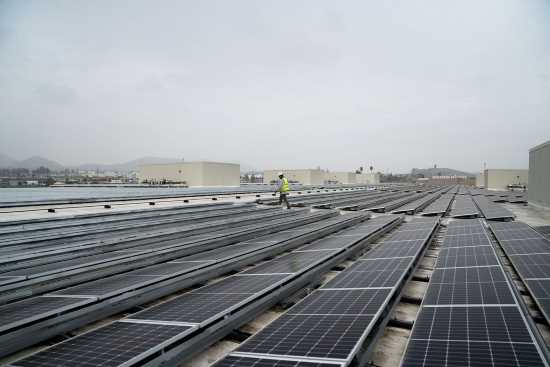
Simon: We plan to pilot additional projects at select facilities to prove the scalability of the MEMOSA algorithm and the process of developing a microgrid at those sites. The goal is to measure results in a variety of facilities and different energy markets throughout the United States.
Those test sites are in the process of being selected but one is our Colton facility in California. It’s exciting because there are two controllable energy assets at this site – solar panels and linear generators onsite – and with the help of Motive Energy we’ve recently installed a battery so that one is near commissioning.
Q: How do microgrids align with our overall energy R&D strategy?
Simon: Lineage facilities are charged monthly for electricity, just like any other industrial facility or residential home. Some of those charges reflect your energy consumption performance throughout the entire month. Our goal with these microgrid projects is to optimize our energy usage by using onsite power options strategically.
Microgrids also add an element of resiliency by allowing us to generate energy onsite to temporarily power our operations when there are events like blackouts. If we can keep our freezers cold, the products they hold are safe and we can prevent food loss.
Q: How does it feel to watch something you helped build make a real difference in operations?
Simon: I’m very proud of bringing an early-stage R&D idea to life and helping a Lineage facility reduce its energy costs and footprint. I've never really been able to see something go from this early to this impactful until now.
And it's very cool to bring cutting edge technology to the cold storage supply chain. Some of these machine learning algorithms used in this project are very modern concepts and were published within the last five years.
I've always been motivated by impact and really interested in energy so it’s very exciting to be part of a solution for a real-world problem.
You can learn more about our Salem microgrid in this post. Interested in more tech and innovation stories? Check out these blogs for more ways Lineage is shaping the future of the cold chain.