Temperature-controlled rail expands long-haul opportunities for food companies
Services spotlight
June 17, 2026
Many food products travel hundreds or even thousands of miles before ever reaching customers. Temperature-controlled rail has been helping move those products for decades, especially when large volumes are involved.
For most companies, rail isn't a replacement for truck transportation. It's another option, and the two are often used together. Combined with warehousing and logistics support, refrigerated rail shipping gives companies another way to move product and position inventory closer to customers.
Temperature-controlled rail services offer scale and efficiency
Products that move in large volumes and travel long distances have long been moved by rail. Whether it’s french fries from Canada being sent to customers in Texas or fruit ingredients in California being sent to beverage manufacturers in Florida, a single railcar can carry the equivalent of several truckloads, making it an efficient option.
For most customers, rail and truck transportation go hand in hand. Rail handles the trip across the country, while trucks take care of the first and last miles.
Why companies choose refrigerated rail shipping
 Every supply chain is different, but temperature-controlled rail can offer several advantages.
Refrigerated rail helps companies:
- Move larger volumes
- One railcar can carry the equivalent of several truckloads.
- Position inventory closer to customers
- Rail can help companies place product closer to the markets they serve.
- Add transportation flexibility
- For many companies, rail and truck transportation work side by side.
- Reach locations where truck capacity is limited
- Rail provides another option when trucks are harder to find.
- Protection from fuel price fluctuations
- Fuel price fluctuations have a greater effect on truck transportation than rail.
- Support sustainability goals
- Moving more product in fewer shipments can help reduce emissions.
Why Lineage for temperature-controlled rail
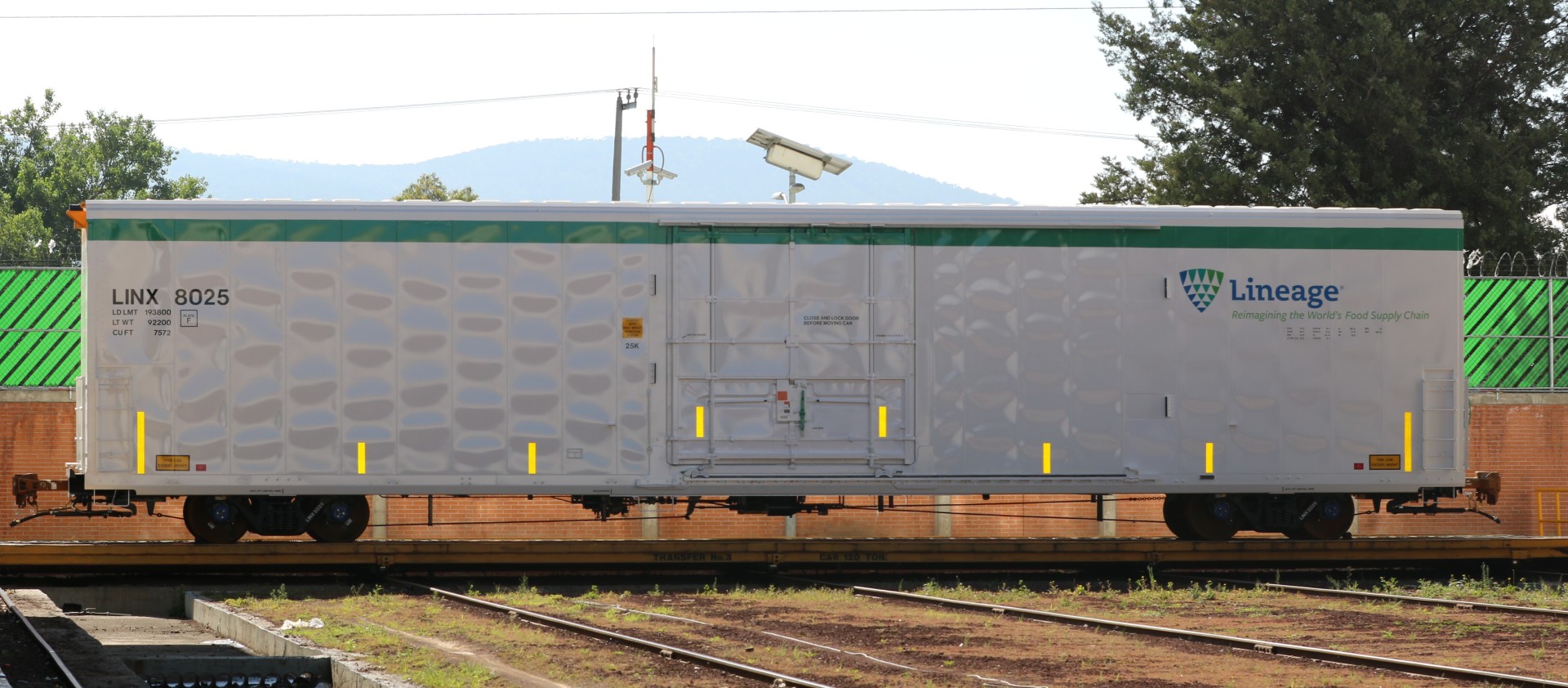
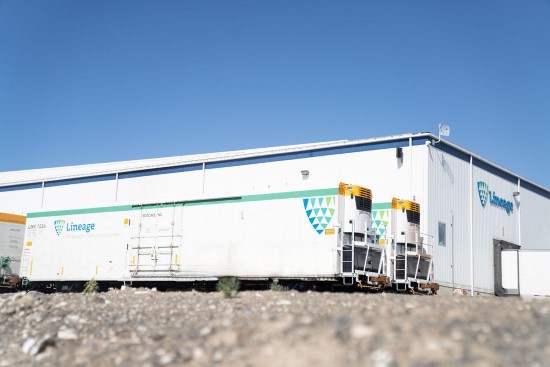
Lineage's rail fleet includes more than 2,800 railcars, but the value extends beyond the cars themselves. Customers also gain access to over 70 rail-served facilities across the network, helping connect rail transportation with cold storage, distribution and truck transportation.
Lineage facilities with rail access include:
- Rochelle, IL
- Allentown, PA
- Richland, WA - Polar Way
- Oxnard, CA
- Attalla, AL
- McDonough, GA
- Edwardsville, KS
- Geneva, IL
- Greeley, CO
The Lineage team helps coordinate the details involved with rail while connecting customers with additional services that support the broader cold chain. That means products can move by rail, be stored near destination markets and be delivered from strategically located facilities.
Customers can also connect rail transportation with managed transportation, import and export services and other integrated solutions. Rather than treating rail as a standalone service, Lineage helps customers build rail into a larger supply chain strategy.
A different approach to long-haul cold chain transportation
Food products have been moved via temperature-controlled rail for decades, but many companies still view it as a difficult to manage method of transportation.
Rail isn't meant to replace every truck movement. It's another tool that can help companies move large volumes and add flexibility to their transportation strategies.
By combining temperature-controlled rail with warehousing, logistics expertise and integrated solutions, Lineage helps customers take advantage of the benefits of rail without having to manage the complexity on their own.