Blast freezing: protecting product quality across the frozen supply chain
Lineage Services Spotlight
March 13, 2026
Freezing product before it enters the cold chain might sound simple enough. Put food in a cold room, wait long enough and eventually it freezes. But for companies that rely on frozen storage to protect the quality of their product, the way that freezing happens can determine whether a product arrives in excellent condition, or whether quality problems show up later when the product is thawed.
That’s where blast freezing comes in.
Blast freezing is one of the first steps in the cold chain, preserving a product before it moves into cold storage, transportation or export. When freezing is done quickly and correctly, it can help protect the food product’s texture, color and overall quality, even if it has to travel thousands of miles before ever reaching the end customers.
What is blast freezing?
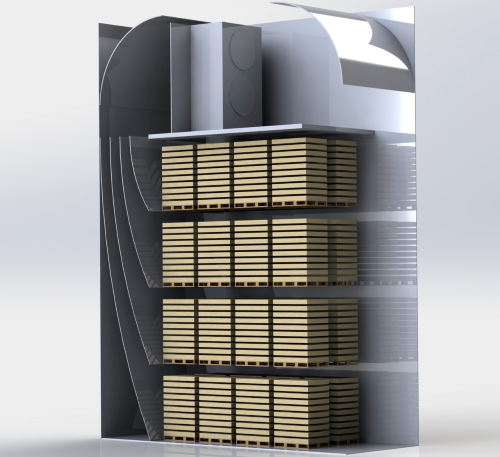 Blast freezing simply means freezing food much faster than traditional methods. Instead of allowing a product to gradually freeze in storage, blast freezing rapidly removes heat from the product, so it reaches frozen temperatures quickly and evenly. That speed helps preserve the color, texture and overall quality of the food.
The main philosophy behind this service is that if freezing happens too slowly, structural changes can occur within the product. Those changes might not be obvious while the food is frozen but show themselves after the first thaw. Texture may soften, moisture can escape from the product and color or appearance may shift. All of these issues can affect your bottom line.
Blast freezing helps prevent those issues by freezing products quickly and evenly before they enter long-term frozen storage. For customers who move large amounts of food through temperature-controlled warehouses, this early step helps set the stage for everything that follows in the cold chain.
Why blast freezing matters for your supply chain
It’s easy to think of freezing as just another step in the cold chain between production and storage. In reality, the freezing method can shape what happens later in your supply chain. When freezing takes too long, the impact usually doesn’t show up right away. It shows up later, when the product is thawed, cooked or served. That’s when texture loss, discoloration or excess moisture can appear. Blast freezing helps avoid those problems by freezing products quickly at the start of the cold chain, setting you up for success down the line.
For producers and distributors, that early step can help solve cold chain challenges, like:
- Protecting your product’s quality
- Blast freezing can help maintain the structure and quality of your food products by better preserving the original texture, color and appearance, even after it’s thawed or prepared.
- Maintaining consistency across your shipments
- If your products are frozen quickly, they tend to behave more predictably from batch to batch, helping maintain your brand’s consistency and quality across shipments.
- Supporting longer supply chain journeys
- For long-distance and export-focused supply chain journeys, blast freezing helps stabilize and preserve your product along the way.
- Reducing downstream surprises
- Problems caused by slow freezing often appear much later in the process. Blast freezing can help reduce the risk of those issues showing up after the product reaches customers.
Taken together, those benefits help producers and distributors move frozen products with even more confidence.
Food products that benefit most from blast freezing
Blast freezing is used across a wide range of food categories. Any product where texture, appearance or shelf-life matters can benefit from rapid freezing before it enters long-term frozen storage or distribution.
Common products that rely on blast freezing include:
 Beef, pork and other red meats
- These products often move quickly from processing into freezing, especially when they are headed for further processing, cold storage or export.
- Poultry products
- Chicken, turkey and other poultry are frequently blast frozen soon after processing, so quality is preserved before the product enters frozen storage or distribution.
- Seafood and shellfish
- Fish, shrimp, squid and other seafood can be particularly sensitive to the slow freezing process. Rapid freezing helps protect their texture, appearance and food safety.
- Fresh produce and berries
- Products like strawberries, blueberries and cranberries are often frozen during peak harvest so their quality can be preserved long after the growing season ends.
- Prepared foods and meal components
- Sauces, meal kits and other prepared foods rely on quick and consistent freezing methods to help ensure the product performs the same way when it is eventually thawed or cooked.
For products that will travel long distances, especially exports, freezing quickly at the beginning can make a big difference. It helps protect your product before it spends days or weeks moving through storage, transportation and distribution.
Supporting export and global distribution
Blast freezing can be especially valuable in the frozen export process.
International shipments are marked by long transit times, changing environmental conditions and limited control once your container leaves the port. The extended journey can put stress on your product, even when the refrigerated containers maintain their recommended temperatures.
By freezing products quickly near the point of production, you can stabilize your product before it even begins the journey.
Blast freezing works best in these scenarios as an early step in preparing your food for international transportation. The product is quickly and thoroughly frozen, moved into long-term frozen storage and then integrated into the export logistics process. This process can include containerization inland or movement through a port facility, depending on your logistics network.
For exporters, that extra layer of protection up front can help ensure your product arrives overseas with the quality your customers have come to expect.
-
North America
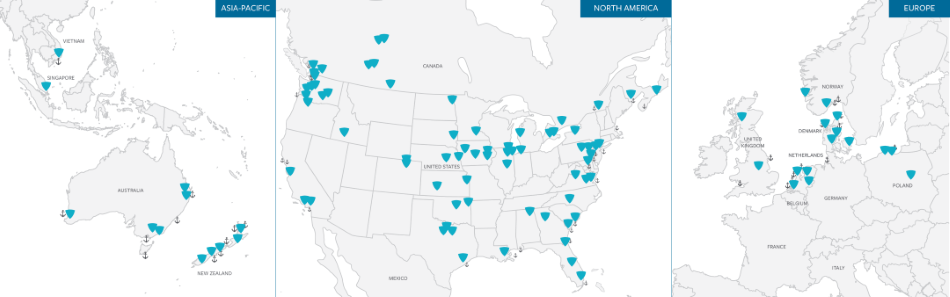
Lineage Blast Freezing Facilities in North America Include:
- Calgary - 3925 — AB, Canada
- Calgary - Great Plains, Alberta — AB, Canada
- Edmonton - 62nd Street — AB, Canada
- Edmonton - 127th Avenue — AB, Canada
- Lethbridge — AB, Canada
- Abbotsford — BC, Canada
- Surrey — BC, Canada
- Winnipeg — MB, Canada
- London — ON, Canada
- Ingersoll - Ingersoll Street — ON, Canada
- Ingersoll - Thomas St. — ON, Canada
- Santa Maria — CA, US
- Manteca - Spreckels — CA, US
- Oxnard - East 3rd — CA, US
- Stockton - Port A Road — CA, US
- Greeley - 1st Avenue — CO, US
- Albany 2 - 1015 Worth — GA, US
- Macon - Industrial — GA, US
- Rincon — GA, US
- Unadilla - Pine — GA, US
- Altoona - Adventureland — IA, US
- Denison - Industrial — IA, US
- Iowa City - Highway 6 — IA, US
- Mount Pleasant — IA, US
- Ottumwa — IA, US
- Geneva — IL, US
- Chicago - 7035 West 65th Street — IL, US
- University Park - Central — IL, US
- Logansport — IN, US
- Dodge City — KS, US
- Edwardsville — KS, US
- Olathe - 167 — KS, US
- Louisville - Industry Road — KY, US
- Louisville - Winstead Drive — KY, US
- Baltimore - Holabird — MD, US
- Jessup - Oceano Ave — MD, US
- Benton Harbor — MI, US
- Richland (WA) - Polar Way — MS, US
- Statesville - Taylorsville — NC, US
- Tar Heel - Highway 87 — NC, US
- Grand Island — NE, US
- Lincoln — NE, US
- Omaha - Gomez Avenue — NE, US
- Omaha - Renfro Circle — NE, US
- Springfield — OH, US
- Salem - Ewald Avenue SE — OR, US
- Allentown - Ruppsville — PA, US
- Charleston — SC, US
- Dallas (Sunnyvale) — TX, US
- Friona - Millard — TX, US
- LaPorte - Hwy 225 — TX, US
- Round Rock — TX, US
- Tremonton — UT, US
- Norfolk - Hampton — VA, US
- Portsmouth - Lineage Way — VA, US
- Sandston - 5501 Corrugated Road — VA, US
- Smithfield — VA, US
- Centralia — WA, US
- Milwaukee — WI, US
-
Europe
Lineage Blast Freezing Facilities in Europe Include:
- Rijkevorsel - Houtelweg — Belgium
- Vejle - Kristian Skous Vej 1 — Denmark
- Engesvang - Løhdesvej — Denmark
- Hanstholm - Industrivangen — Denmark
- Hirtshals - Jens Munksvej — Denmark
- Skagen - Coasterkaj — Denmark
- Bergen op Zoom - Blankenweg — Netherlands
- Gnatowice Stare - Stare Gnatowice — Poland
-
Asia-Pacific
Lineage Blast Freezing Facilities in Asia Pacific Include:
- Lurnea - Jedda — Australia
- Hemmant - 1248 Lytton Road — Australia
- Cavan - Bradford (2) — Australia
- Welshpool - Kurnall — Australia
- Christchurch - Braeburn — New Zealand
- Timaru - 153-189 Dawson Street — New Zealand
Helping customers manage seasonal surges
Blast freezing also plays an important role for food producers that operate around seasonal harvests.
When crops are harvested, time immediately becomes a factor. Food products like fruits, vegetables and even seafood begin to change the moment they’re harvested and the producers often need to move large volumes into the freezing process in a short window to stay ahead.
Blast freezing is designed to help accelerate that important transition from fresh to frozen.
By freezing product quickly, these facilities can help mitigate loss during peak harvest periods. More product moves through the system, giving you a better chance of preserving the highest possible quality and quantity, before nature takes its course.
For growers and processors handling large seasonal volumes, whether its fresh produce, seafood or other perishable foods. That speed can make all the difference.
Where blast freezing fits in the cold chain
Blast freezing works best when it’s integrated into your broader cold chain.
Once a product is frozen, it typically moves through several additional steps: frozen storage, transportation, distribution and sometimes international export. Each step depends on the product entering the system in a stable condition.
Because of that, blast freezing capabilities are often located close to production or processing centers. Freezing product earlier in the journey helps lock in that quality before it begins moving through the rest of the supply chain.
From there, the product can transition into cold storage warehousing, transportation networks or export flows, carrying it to customers around the world.
When the freezing step is handled correctly, the rest of the cold chain has a much stronger foundation.
Lineage’s approach to blast freezing
At Lineage, blast freezing is part of a broader approach to managing the cold chain from production through distribution. Our award winning Data Science team has put a focus on developing new, innovative approaches to the blast freezing process and continue to improve the process.
Our global network includes facilities positioned near major production regions and food processing centers, allowing products to be frozen quickly after they leave the field or processing plant. That proximity is key and it helps customers preserve quality earlier in the supply chain.
Lineage teams know these products well. We have a history of working with a wide range of food products, from proteins and seafood to specialty foods and seasonal produce. That level of expertise and familiarity helps ensure freezing processes are handled with an understanding of how these different foods respond to temperature changes and what’s needed to do it the right way.
Blast freezing is integrated into our broader cold storage and transportation network, giving you access to the full suite of Lineage services. Once products are frozen, they can move directly into our temperature-controlled warehousing, domestic distribution networks or export logistics process.
For customers who are navigating complex supply chains, that level of integration helps simplify a complex process, all while protecting your product’s quality.
Protecting product quality from the start
In frozen food supply chains, quality isn’t just about where a product ends up. It’s about how it gets there.
Blast freezing helps producers and distributors protect their products at one of the most critical points in the journey, right at the beginning of the cold chain. By freezing food quickly and consistently, you can preserve the quality your customers expect while preparing products for storage, transport and global distribution.