From production to pâtisserie: How bread and butter move through the cold chain
Helping move the world’s food
March 20, 2026
Snapshot
Overview
Bread and butter begin in separate parts of Europe, then move through export, ocean transit, cold storage and final distribution before coming together in the U.S. Lineage supports the journey at key handoff points, helping keep both products protected, aligned and ready for delivery.
Primary cold chain needs
- Blast freezing and temperature-controlled storage
- Export documentation for two separate shipments
- Port coordination and drayage
- Cold storage and order readiness
- LTL consolidation and refrigerated delivery
How Lineage supports the journey
- Freight forwarding and customs brokerage
- Export coordination from Le Havre and Dublin
- Drayage from Charleston to cold storage
- Temperature-controlled warehousing
- Lineage Link® order visibility
- LTL expertise for consolidated delivery
Bread and butter are everyday staples, but getting them to the same table—fresh, consistent and ready to serve—takes more coordination than it might seem.
They’re produced in different places, handled by different teams and moved through separate parts of the supply chain. One comes out of an oven in France. The other is churned in Ireland. But by the time they reach a restaurant table or retail shelf in the United States, they need to arrive together and in the same condition they left in.
That only happens when every step in between lines up.
Crafted in two places, prepared for one journey
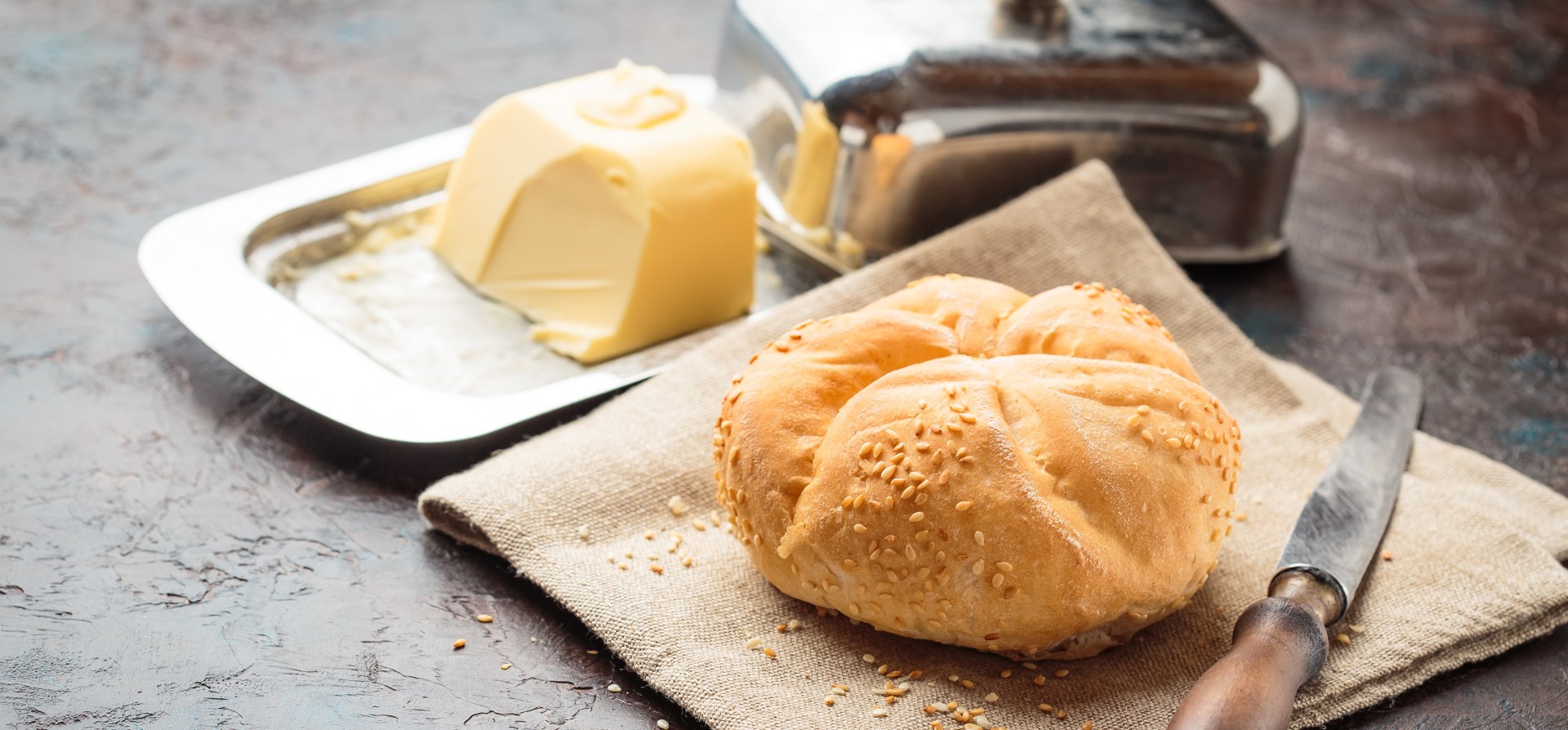
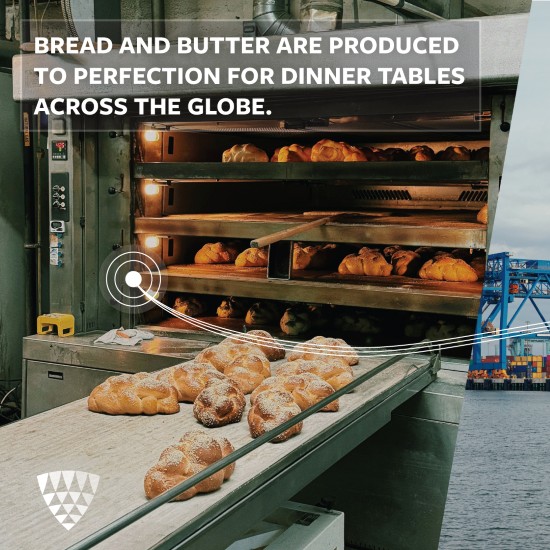 In this particular journey, the bread is baked in France. Once it’s out of the oven, it has to be cooled, packaged and frozen quickly. Vacuum sealing and blast freezing help lock in the texture so it holds up well beyond the bakery.
In Ireland, the butter follows a completely different path. It’s churned from milk sourced from grass-fed cows, then wrapped, packed and stored under tightly controlled temperatures. Some shipments stay refrigerated, others frozen, depending on how they’ll move.
Two different products. Two different processes. But both are handled with the same goal in mind: make sure what leaves Europe is in the same condition when it shows up in the U.S.
Coordinating export across two origins
This is where the journeys start to converge. Before either product leaves port, there’s a lot happening behind the scenes. Documentation has to be right. Timing has to be tight. And both shipments need to move on schedules that ultimately line up on the other end.
Lineage teams handle the export clearance process for both the bread and the butter, making sure everything is in place before departure. Vessel space is secured, containers are positioned, and drayage is coordinated to move everything to port.
The bread moves out of the Port of Le Havre, in France. The butter leaves from the Port of Dublin, in Ireland. Different ports, different countries, but all part of the same timeline.
Learn more about the journey of bread and butter through the cold chain
Arriving in Charleston
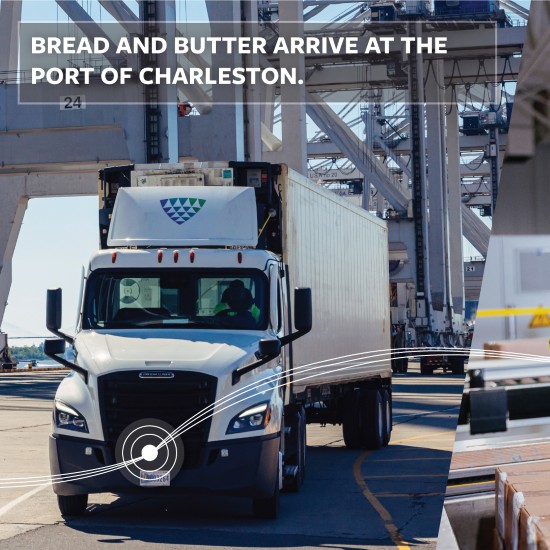 When both shipments arrive in Charleston, the pace picks back up quickly.
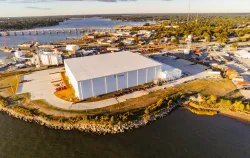
Containers are unloaded, placed onto a chassis and moved out of the port. From there, drayage carries them to Lineage’s nearby cold storage facility. This is one of the most important handoffs in the entire journey. It’s the moment where ocean transit ends and inland handling begins. If something slips here, it may not be obvious until the product is made ready for distribution.
Chilled, sorted and held for demand
At the facility, the work becomes more granular. Boxes come off containers and move through a process that’s equal parts routine and precision. This process includes sorting, labeling, palletizing and shrink-wrapping. Nothing complicated on the surface, but everything has to be done right.
Once that’s complete, both products move into cold storage. This is where flexibility comes in. Orders haven’t been placed yet and timelines can shift. But the product is protected, organized and ready to move as soon as it’s needed.
Bringing two products together for delivery
The final step is where everything comes together. When an order is placed through Lineage Link®, both the bread and butter are pulled from storage and staged for shipment. Even though they started in different countries, they’re now handled as one order.
They’re consolidated using Lineage’s Less-than-Truckload (LTL) shipping services, which helps make better use of truck capacity without slowing things down. The shipment is consolidated, loaded onto a refrigerated truck and sent to a regional distribution center.
After that, it fans out to retail locations and foodservice operations across the country.
Lineage has what it takes to bring bread and butter together
The journey of bread and butter through the cold chain is often invisible to consumers. People don’t see the separate origins, the export coordination, the port handoffs or the time spent in storage waiting for the right order. People just see two things that belong together on their dining room table.
But getting them there in the first place takes alignment across every step. From packaging and refrigeration, to customs brokerage and port logistics, to freight forwarding and LTL shipping, Lineage solutions help make the journey of bread and butter possible.