Inside the team setting a new standard for protein export compliance
April 15, 2026
Exporting animal-protein products isn’t just about moving goods from one country to another. It’s about getting the details right before that product ever leaves the facility.
A missing form. A small documentation error. A misinterpreted requirement. Any one of these can delay a shipment, trigger a rejection or force product to be returned. For exporters, the risk isn’t just theoretical. It’s part of the process.
At Lineage, that reality led to a fundamental question: What would it look like to take the complexity out of exports and get it right every time?
How inconsistent processes led to a centralized export solution
Not long ago, export documentation and inspection processes were handled locally at each facility across the Lineage network. Some teams already had deep experience. Others were learning as they went. Most were balancing export requirements alongside a long list of other responsibilities.
While some locations ran smoothly, others were stuck reacting. Fixing errors, navigating unclear requirements or trying to resolve issues after a shipment was impacted.
It became clear that export compliance wasn’t something that could be handled as a secondary task. It required focus, experience and consistency. In February 2024, Lineage officially launched its Export Excellence Service Center. This specialized team was built to bring structure, focus and reliability to the export process.
The specialists behind more predictable exports
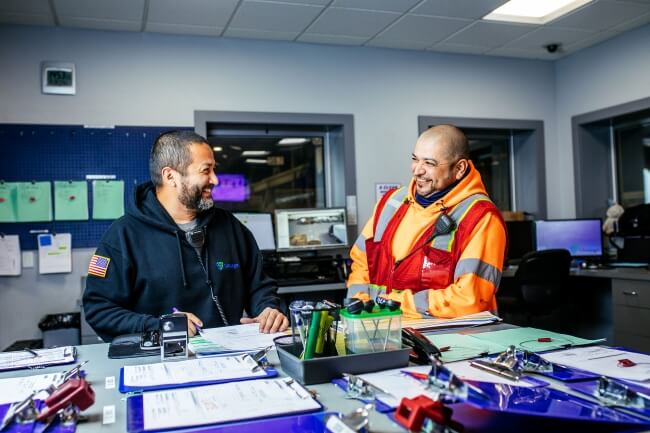 The Export Excellence team is exactly what it sounds like: a dedicated group of specialists focused on export documentation, compliance and inspection processes within Lineage facilities. Specifically, this team focuses on the export certification of products regulated by the USDA’s Food Safety and Inspection Service (meat, poultry, egg products and Siluriform fish), where Lineage plays a key role in certifying product for and prior to export
Untethered from individual facilities, they no longer split their time tackling unrelated tasks. Exports are their focus. The new team focused on leveraging existing in-house experience to remove limitations and unleash our expertise, driving benefits and impacts to more facilities and more customers.
Their work is rooted in helping ensure shipments meet the requirements of their destination before ever leaving the facility. This includes, but is not limited to, validating eligibility, preparing documentation, coordinating inspection processes and finalizing export certificates.
Having a team that is fully dedicated to one of the most complex and risk-sensitive parts of the food supply chain helps our customers export animal proteins without the stress.
The checklist that helps determine whether animal protein exports succeed or stall
For many exporters, the most challenging part of the process isn’t transportation. It’s everything that has to happen before the shipment can move.
Every export begins with a set of questions:
- Is the product eligible for export to that country?
- Is the origin facility approved to source it?
- Is the facility registered to ship it?
- Are there current restrictions or regulatory changes that apply?
- Will additional labeling need to be applied to meet destination requirements?
- What documentation is required, and how should it be completed?
The Export Excellence team works through these questions every day by reviewing export requirements based on product type, destination country and facility eligibility. Using USDA guidance and other regulatory resources, this team helps validate that shipments meet all the necessary criteria.
From there, they prepare applications required for the certificates and approvals needed to export their products. These documents must be precise, align with current regulations and be completed correctly the first time.
Once prepared, documentation is shared for customer review to make sure nothing is missed before finalizing. At the facility level, the team coordinates the necessary inspections. Products are reviewed, verified and then prepared for shipment.
This process is done hundreds of times each day across the Lineage network, and while it’s repeatable, it’s never simple.
When export rules shift, experience becomes the advantage
Export requirements are constantly changing. Different countries have different rules, products have different restrictions and regulations can shift quickly based on real-time factors. That’s why experience matters.
Lineage’s Export Excellence team brings together specialists from across the network with deep experience in different products, markets and regulatory environments. They can quickly identify requirements, flag risks and guide decisions with expertise.
This means that in moments of complexity, the team steps in to validate requirements, clarify documentation and support escalations, helping resolve issues before they delay or block a shipment.
Bringing uniformity and consistency to a historically fragmented process
Additional benefits that the Export Excellence team introduced are consistency and integration. Instead of each facility managing export processes independently, there is now a standardized approach across the Lineage network.
The same level of expertise is applied to every shipment. The same processes are followed. The same attention to detail is maintained. For customers, that consistency translates to dependability.
It means fewer surprises. Fewer delays caused by documentation issues. And more confidence when expanding into new export markets.
A more reliable path forward for global food exports
Exporting protein products will never be simple. There will always be regulations to navigate, documentation to complete and inspections to pass. But with a practiced team of experts, it becomes something else: predictable.
With the Export Excellence team, Lineage has built a process designed to reduce risk, improve consistency and support customers at every step along the way. For companies navigating global food exports, that means fewer unknowns and more confidence that their next shipment is prepared to move forward the right way.