More than warehouse storage: 6 cold chain services you might not know Lineage offers
June 03, 2026
The cold chain grows more complicated and connected each year. Everyday, products are shipped globally, moving between warehouses, cities and across borders. These products must seamlessly shift between a variety of transportation modes along the way. But conditions change quickly across the supply chain, driven by challenges like delays at ports, weather disruptions and changing regulations. Each issue can ripple out across the supply chain, creating more issues down the line.
That’s why many food manufacturers, distributors and retailers look for partners that can support more than just warehouse storage. Enter Lineage. With a service suite that ranges from coordinating imports and exports to optimizing transportation networks, Lineage supports customers from a wide range of backgrounds with an even wider range of services that many people may not even realize are part of our network.
Here are six cold chain services, beyond traditional warehouse storage, that you may not know Lineage offers.
Bonded drayage and bonded warehousing keep imports moving
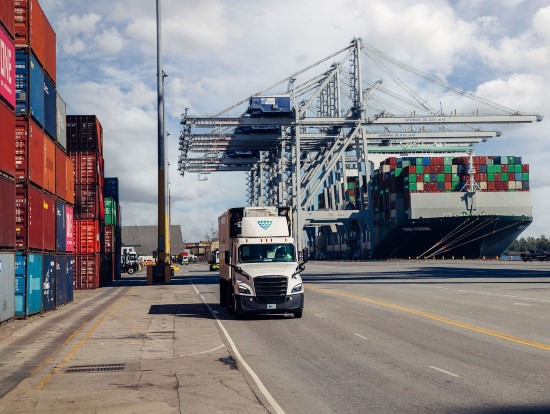 At busy ports, imported shipments can end up waiting on the dock for inspections, customs paperwork or clearance approvals before being allowed to officially enter the country. Meanwhile, the refrigerated containers still need power, appointments still need to be scheduled and product still needs to keep moving.
That’s why bonded drayage and bonded warehousing matter in the cold chain.
Bonded drayage allows imported freight to move from port to an approved bonded facility while the customs process continues in the background. Instead of sitting at the terminal longer than necessary or being released to the market and potentially triggering costly tariffs, product can be moved in-bond to be repositioned to a bonded warehouse closer to the end market and then strategically released over time.
Products stored in bonded warehouses can defer duties until the goods are ready to officially enter the market, creating more flexibility and control depending on market conditions and customer demand. It’s an important service for tariff-affected products, like frozen proteins and seafood.
Velocities multivendor consolidation reduces delivery complexity
Getting food to restaurants and retail locations takes a lot of coordination. Individual deliveries might include products from several different suppliers, all arriving on different schedules and from different parts of the country. Without coordination behind the scenes, complications can multiply.
Lineage’s Velocities Multivendor Consolidation Program was designed to help simplify that process.
Instead of products moving separately from each supplier, inventory can be consolidated together into shared shipments. This allows distributors to ship more product in fewer truckloads, rather than managing several smaller shipments.
The program also connects with Lineage’s broader transportation and warehousing services, giving customers the ability to coordinate more of the process within one connected network instead of piecing it together across multiple providers.
Freight forwarding helps coordinate international shipments
Most international shipments don’t move in one straight line. A load might leave a production facility by truck, transfer to a port, move overseas by vessel and then reconnect with rail or another carrier before reaching its final destination. Along the way, there’s paperwork, scheduling, customs requirements and constant communication happening in the background.
Freight forwarding is the service that helps keep all of that organized.
It’s all about helping coordinate the movement itself and making sure the right information follows the shipment where it needs to go. That's especially important for frozen and refrigerated products.
Lineage’s freight forwarding teams work alongside our warehousing, drayage and import/export operations, helping customers keep more of the process connected under the same network instead of managing multiple separate providers.
Temperature-controlled rail supports long-distance distribution
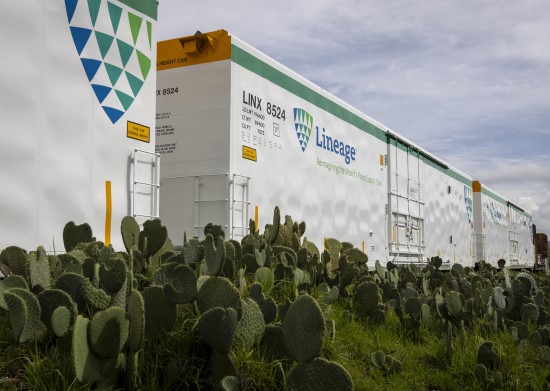 Most people think of trucks when they think about refrigerated transportation. But rail plays a big role in moving frozen and refrigerated food across the country, especially for long-distance shipments and high-volume products.
A shipment may move by truck first, transfer onto rail for the longer portion of the trip and then reconnect with local transportation networks closer to delivery. Warehouse storage often fits into that process too. It works best when those different pieces are coordinated together.
Lineage supports temperature-controlled rail alongside warehousing and transportation services across the broader network, helping customers connect more of the process through a single provider.
Supply chain engineering designs smarter networks
Not every supply chain problem gets solved on the warehouse floor. Sometimes the bigger question is whether the network itself is set up the right way in the first place.
Lineage’s supply chain engineering service helps customers look at how products move through their operations and where adjustments might improve efficiency. That can include things like transportation modeling, inventory analysis and network optimization.
For some customers, a small shift in where inventory is positioned or how freight moves through the network can make a noticeable difference. This specialized service is becoming increasingly important as supply chains grow more connected and more complex.
Customs brokerage helps simplify international trade
Moving products across borders comes with a lot of paperwork. Different countries have different rules, different products have different requirements, and sometimes those requirements change with very little notice.
Customs brokers help manage the documentation and compliance side of imports and exports, helping shipments move through ports and border crossings with fewer surprises along the way.
Lineage connects customs brokerage with services like bonded drayage, freight forwarding and bonded warehouse storage, giving customers access to teams that already work closely together across the import/export process. That means customers can keep more of their process connected through the same network.
There's more to Lineage than warehouse storage
Most people know Lineage for warehouse storage. But in the cold chain, storage is only one part of the operation.
Products still need to move through ports, across transportation networks and between facilities before ever reaching their final destination. Along the way, delays, missed communications, shifting demand and changing regulations can all impact the flow of the supply chain.
That’s why many companies are turning to connected services that go beyond cold storage alone.
From freight forwarding and customs brokerage to rail, drayage and network optimization, Lineage helps customers connect more of the cold chain through one broad network.