Five supply chain problems solved—With help from Team Lineage
December 22, 2025
Every company moving temperature-controlled products knows the truth: the biggest challenges are the ones that hit without warning. This year, we had the opportunity to share the stories of five real Lineage customers, each facing a different kind of pressure, from storms and tariff shifts to port strikes, network bottlenecks and even rapid, unplanned growth.
What connects these different stories is the way Lineage teams worked shoulder-to-shoulder with customers to help protect their product, keep freight moving and prevent small setbacks from becoming big disruptions. They show why it is so critical to have a partner with the right experience and the right quick-thinking mindset when you’re facing an “I have no idea how we’re going to make it happen” moment.
1. When a bomb cyclone threatened $350K in inventory
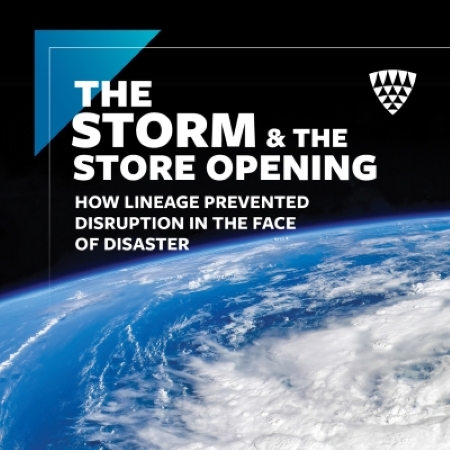 One of the most intense stories published this year began months earlier: a Canadian specialty grocer was preparing to open its first U.S. store when a fast-forming bomb cyclone swept through the Pacific Northwest in late 2024. Power was cut. Refrigeration systems halted. Fresh and frozen foods were at risk and the grand opening was in serious jeopardy.
Trucks were on-site within hours of the first late-night call to Lineage. Over the next 36 hours, more than 10 truckloads of endangered product were relocated into nearby cold storage, fully protected and ready to return once power was restored.
What stayed on track:
- More than $350,000 in fresh and frozen inventory
- The scheduled grand opening
- Customer reputation
2. When a 105-million-pound harvest demanded a bigger footprint
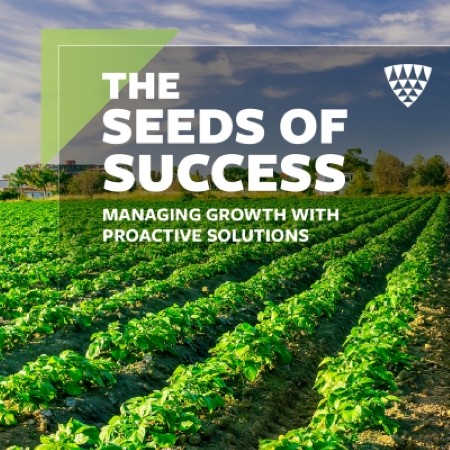 Seasonal peaks are predictable, but sometimes they outgrow even the best forecasts. A frozen produce manufacturer anticipated a record-breaking year, with more than 105 million pounds of product coming off the fields. They were going to need more cold storage capacity; five times more to be exact.
Their challenge wasn’t just finding more space. They needed strategically located capacity paired with integrated transportation, all aligned to their distribution routes. It was all about getting the product safely stored, with easy access to the markets that mattered most.
Here, Lineage’s role was simply making sure the customer didn’t outgrow their own supply chain. That meant opening doors at the right facilities, lining up transportation and keeping communication steady as their volume climbed, both now and in the future.
Here’s how it came together:
- Expanded from 3 facilities to 15
- Secured storage for 64,000 pallets
- Coordinated more than 400 temperature-controlled shipments
The harvest came in fast, but shipments stayed consistent and customers saw no delays.
3. When a tariff deadline created a race against time
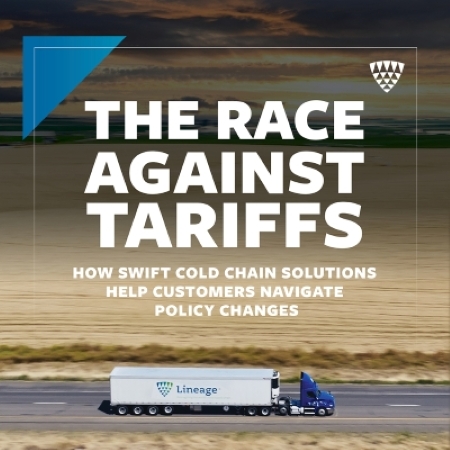 Earlier in the year, a Canadian frozen food manufacturer was watching news about potential import tariffs. They understood what a sudden rule change could mean for the cost, availability and pricing of their product in the U.S.
To stay ahead, they needed a cross-border plan and they needed it now. That meant identifying a U.S. cold storage facility close to the border, moving freight fast and aligning transportation, warehousing and system setup in days instead of weeks.
This one required everyone getting on the same page fast. Lineage found the right spot near the border, secured space, coordinated the cross-border traffic and set up systems quickly enough to beat the deadline.
That rapid alignment kept the supply chain intact:
- Freight crossed the border before any tariff impacts
- Frozen inventory remained available for U.S. retailers
- No added costs passed down the chain
It’s a reminder that policy-driven disruptions often reward speed and flexibility.
4. When a port strike stalled nearly 50 refrigerated containers
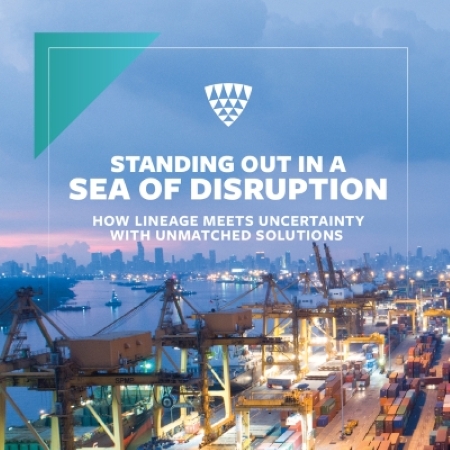 Labor disruptions don’t follow a schedule. When the International Longshoremen’s Association (ILA) strike shut down East and Gulf Coast ports, a seafood importer suddenly had high-value product stuck in nearly 50 containers. Fees were mounting. Product integrity was at risk. The clock was working against them.
A rapid, multi-site response from Lineage made the difference. Staff were deployed across facilities. Space was opened quickly. Freight movement ran around the clock.
In just three days, the team:
- Cleared 72 containers
- Protected 2.8 million pounds of seafood
- Kept $10M+ of product moving despite the shutdown
A port shutdown of that scale could have had long-term impacts. Instead, it became a controlled, manageable event.
5. When a network analysis uncovered $2M in potential annual savings
 Not every problem looks like a full-blown crisis. Sometimes it shows up as slowdowns, bottlenecks or transportation costs that don’t seem to match the volume being shipped.
That’s what a U.S. importer/exporter was experiencing when they asked for a full analysis of their distribution and facility network. Their challenges weren’t tied to a specific event, they were built over time through growth, shifting product flows and capacity constraints.
In this case, Lineage’s data and operations teams took a closer look at how the customer’s supply chain was actually flowing. By mapping out the bottlenecks, they discovered a network design that worked better and cost less.
The network analysis revealed a clearer path forward:
- Four new distribution centers added to their modeled network
- New recommended ports of discharge
- An estimated $2M in transportation savings per year
The takeaway: resilience isn’t only about reacting quickly; it’s also about understanding your network well enough to catch inefficiencies before they slow you down.
What these stories tell us about the cold chain today
Across storms, strikes, seasonal surges and data-driven redesigns, one thing stands out: the companies that stay ahead are the ones that stay flexible and nimble.
Some of these disruptions happened months ago. Some pressures continue today. But the lessons are consistent.
What this means for you:
- A strong partner helps stop a disruption from becoming a crisis
- Shared visibility and quick action help keep your supply chain moving
- A connected network in strategic locations gives you options when plans change
- Providers with integrated transportation and import/export solutions can help you seize opportunities more quickly and efficiently
These stories show how staying flexible in the face of challenges, and having the right partner in your corner, keeps your supply chain steady when the unexpected happens.